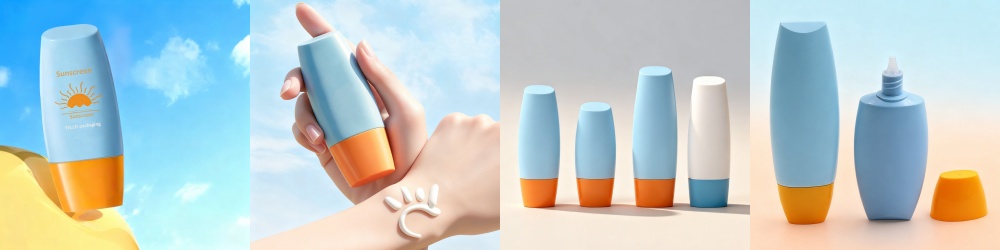
Given cutthroat competition within the sun care sector, premium sunscreen container development hinges on three indispensable design pillars: picking between HDPE and PET raw materials, human-centered body construction, and practical outflow structures.
Well-crafted sunscreen container designs go way beyond merely holding sun protection liquids; these packages act as invisible in-store promoters amid peak summer sales in July and function as a vital medium for brands to win shoppers’ credibility. Given cutthroat competition within the sun care sector, premium sunscreen container development hinges on three indispensable design pillars: picking between HDPE and PET raw materials, human-centered body construction, and practical outflow structures. These three factors safeguard formula integrity, showcase brand positioning and cultivate long-term customer stickiness.
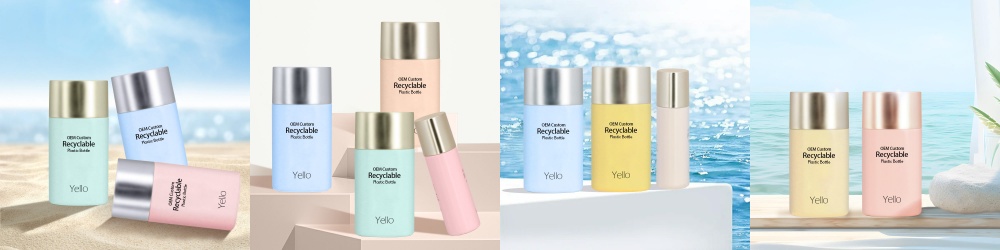
Raw Material Comparison: HDPE and PET Options for Sun Care Container Development
Material specification tops the priority list when developing sunscreen containers, as it directly influences formulation stability and shelf longevity. Short for High-Density Polyethylene, HDPE boasts a 90%–95% ultraviolet shielding rate alongside outstanding chemical inertness, naturally shielding delicate suncare blends from light damage and fitting perfectly for seaside activities under prolonged sunlight. Marked with recycling symbol No.2, this material features strong anti-collision performance and a density between 0.94 and 0.97 grams per cubic centimeter, granting packaging solid, robust physical texture.
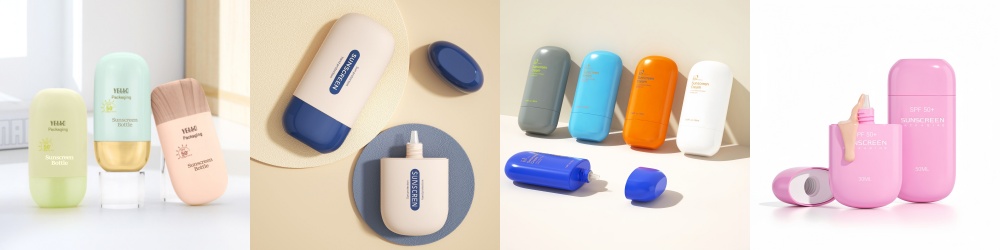
PET, or Polyethylene Terephthalate, shines thanks to crystal clarity and high tensile strength with lighter weight, categorized under recycling code No.1 and with density spanning 1.34–1.39 g/cm³. Even though its UV blocking capability only hits roughly 70% to 75%, its decent oxygen barrier lets buyers view inner contents directly to boost purchase confidence, a perfect pick for labels leaning toward transparent packaging display.
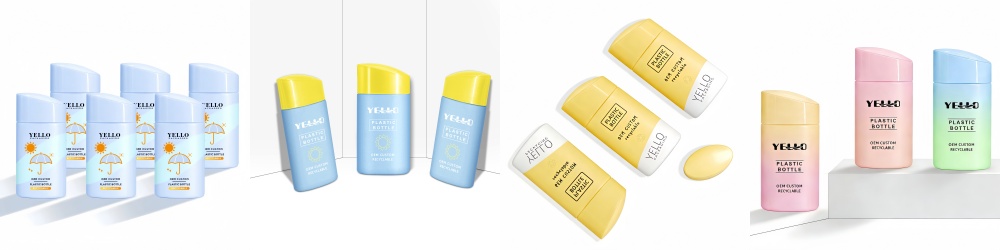
During the packaging development stage, brands need to evaluate three core factors: how delicate their sunscreen formulas are, expected bottle visibility and corporate recycling targets. Most enterprises cooperating with specialized packaging factories will run parallel trials on both plastics to customize tailored container solutions for everyday wear, outdoor sports or coastal usage respectively.
Humanized Bottle Shaping: Molding Techniques for Hand-Friendly Sun Care Packaging
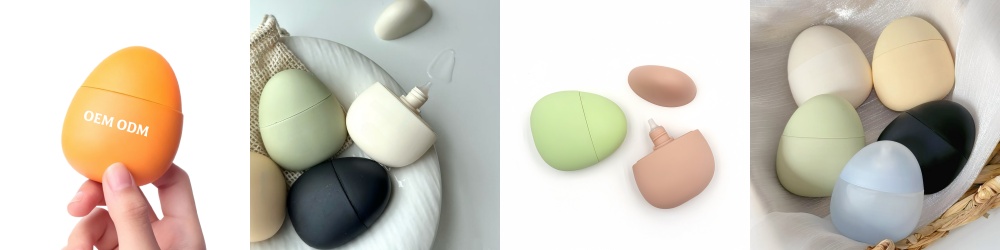
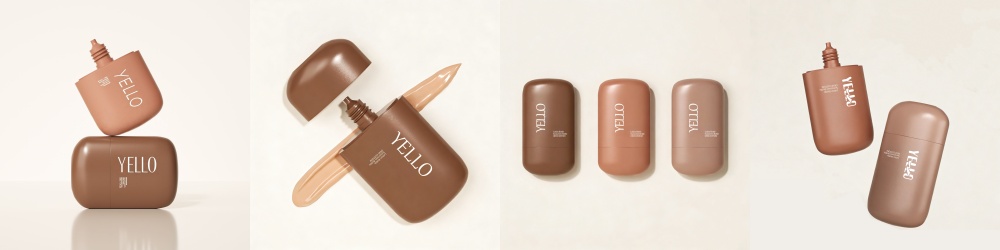
Top-tier sunscreen packaging takes real-life usage into account, especially when users handle bottles with damp, slippery hands outdoors. Manufacturers leverage injection molding craft to tailor curved gripping areas, thumb indentations and anti-skid textured finishes, stopping containers from sliding out of greasy or sand-strewn palms.
Core Ergonomic Design Highlights
- Anti-slip handling: Embossed surface textures avoid slips when wet; streamlined rounded edges upgrade holding comfort
- Stable placement: Broadened bottom foundations keep bottles standing upright; optimized weight distribution facilitates controlled extrusion
- Outdoor durability: Bespoke mold cuts down shell tension; thickened neck sections stop breakage under rough use
Ergonomic comfort is never an optional add-on for suncare packaging, but a must-have for outdoor usability on beaches. Smooth contoured bodies ease product extrusion, widened bottoms guarantee stable placement, and compact sizing improves portability. Precise mold cavity processing and uniform wall thickness inspection during production help maintain consistent hand-feel across all manufactured batches.
Dispensing Styles & Exterior Finishing: Merging Practical Performance with Visual Charm
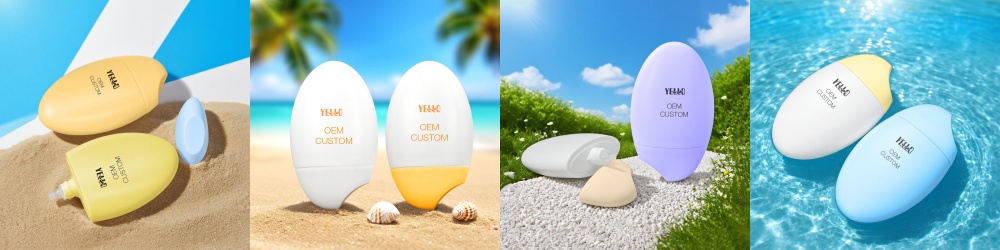
The selection of outlet structures largely decides consumers’ applying experience in finished sunscreen packaging. Pump dispensers deliver measured product output in sanitary conditions and create high-end positioning, best suited for thick cream-type sun creams requiring controlled dosage. Flip-top lids, by contrast, come with lower production costs, allow instant opening and support easy refilling, making them a cost-effective option for daily sunscreen ranges. Every finished packaging solution must pass key functional checks: matching dispenser tightness to formula thickness, anti-leakage trials and optional child-resistant locking setups.
Unique outer artwork builds lasting brand impressions. Silk-screen printing bonds ink firmly onto HDPE surfaces, resisting daily scrapes while keeping brand logos crisp; shrink wrap labels wrap fully around containers for all-around brand imagery plus anti-tampering protection, helping goods stand out prominently on retail racks. To deliver qualified finished packaging, brands carry out strict quality checks including long-term water soaking, UV aging and wear resistance experiments, ensuring surface prints stay intact under harsh open-air surroundings.
Excellent suncare packaging balances practical usability and attractive visuals seamlessly. Vacuum pump packaging keeps fragile active components away from airborne pollutants, while tight-thread sealed caps create leak-proof builds to prevent liquid spillage. All in all, contemporary sunscreen packaging development aims to strike ideal balance between dependable product preservation and distinctive brand visual styling.